




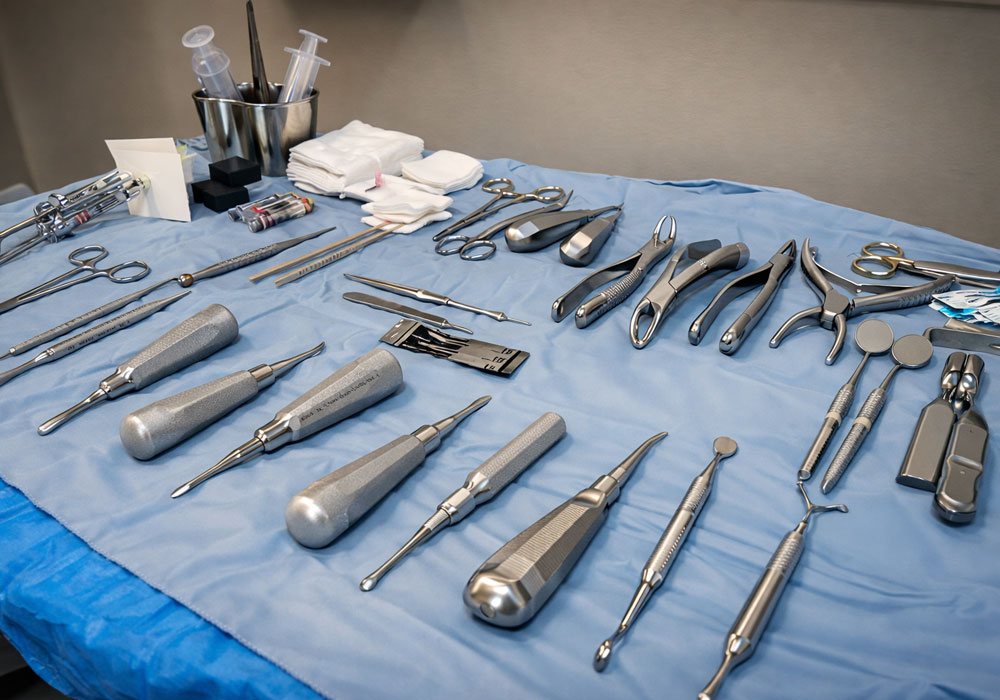
Dental surgery requires precision, control, and strict hygiene standards. The instruments used in oral surgical procedures are specially designed to perform specific tasks such as cutting, lifting, holding, extracting, suturing, and controlling bleeding. Understanding these instruments is essential for dental students, assistants, and professionals to ensure safe and successful treatment outcomes.
1. Diagnostic and Pre-Surgical Instruments
Before surgery begins, proper examination and diagnosis are necessary.
Common diagnostic instruments:
Mouth Mirror – Provides indirect vision and reflects light inside the oral cavity.
Explorer – Detects caries, calculus, and surface irregularities.
Periodontal Probe – Measures gum pocket depth and evaluates periodontal health.
These tools help dentists assess the condition of teeth and surrounding tissues before planning surgery.
2. Elevating and Loosening Instruments
Elevators are essential during tooth extraction and minor oral surgeries.
Types include:
Straight Elevators – Loosen teeth from the socket.
Periosteal Elevators – Reflect soft tissue flaps from bone.
Luxators – Cut periodontal ligament fibers to ease extraction.
These instruments reduce trauma and make extraction procedures smoother.
3. Extraction Forceps
Extraction forceps are designed according to the shape and position of specific teeth.
Key features:
Beaks shaped to fit different teeth
Strong handles for firm grip
Made of high-quality stainless steel
Proper selection of forceps ensures efficient removal with minimal damage to surrounding tissues.
4. Bone Cutting and Shaping Instruments
Certain procedures such as impacted tooth removal or implant placement require bone modification.
Common instruments:
Rongeurs – Trim and remove bone.
Bone Files – Smooth sharp bone edges.
Surgical Burs – Used with handpieces to cut bone precisely.
These tools must be used carefully to avoid overheating and tissue damage.
5. Suturing and Finishing Instruments
After completing the surgical procedure, proper wound closure is essential.
Important instruments include:
Needle Holder – Controls the suture needle.
Tissue Forceps – Hold soft tissue securely.
Surgical Scissors – Cut sutures and trim tissue.
Effective suturing promotes healing and reduces post-operative complications.
Infection Control and Instrument Care
Dental surgical instruments must be sterilized using autoclaving techniques to eliminate microorganisms. Regular inspection, cleaning, lubrication (where necessary), and proper storage extend instrument life and maintain safety standards.
Conclusion
Dental surgery instruments are fundamental to modern oral healthcare. Each instrument is specifically crafted to perform a precise function, whether diagnosing, extracting, cutting, or suturing. Mastery in handling these tools, combined with strict sterilization protocols, ensures patient safety and high-quality treatment outcomes.
As technology continues to advance, dental surgical instruments are becoming more ergonomic, efficient, and patient-friendly—supporting the future of safe and effective dental care.